1. To begin with I introduced the Gettysburg Address by analyzing 2 different pictures relating to the actual event and students recorded these ideas on the Photo Analysis Worksheet provided by the National Archives. I also did this when analyzing the poem "The Road not Taken," by Robert Frost. I just found a picture of forest with a forked path. It was fantastic.

2. After analyzing the photos, we then listened to and read along with the Gettysburg Address, for the pure pleasure of listening.
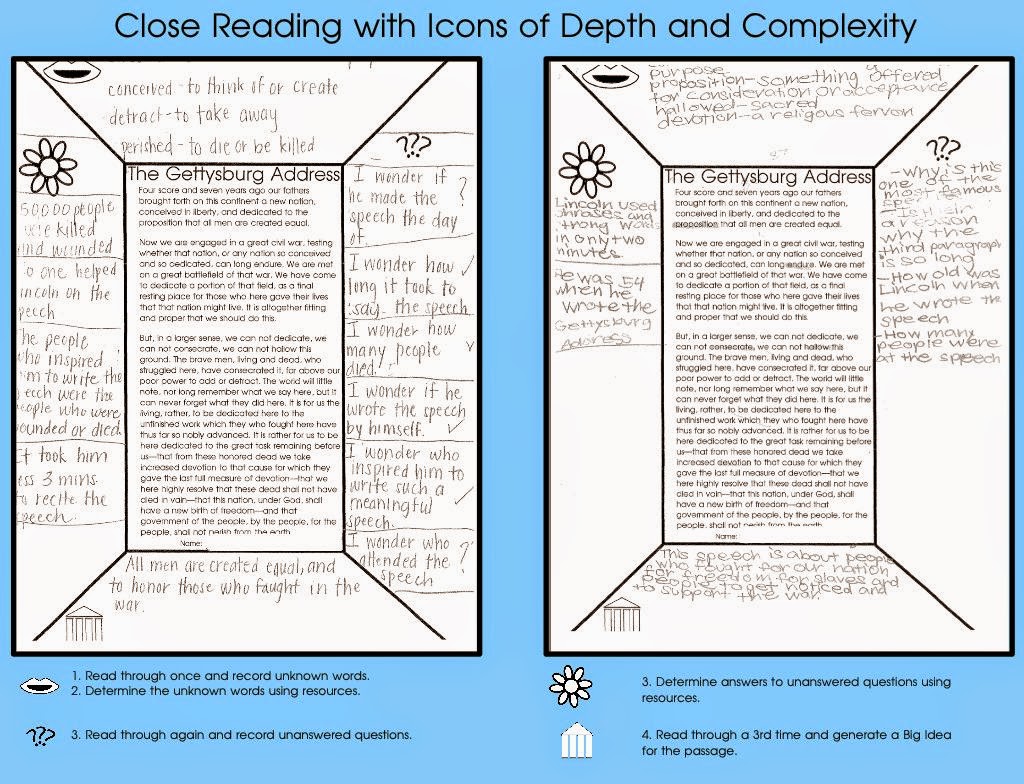
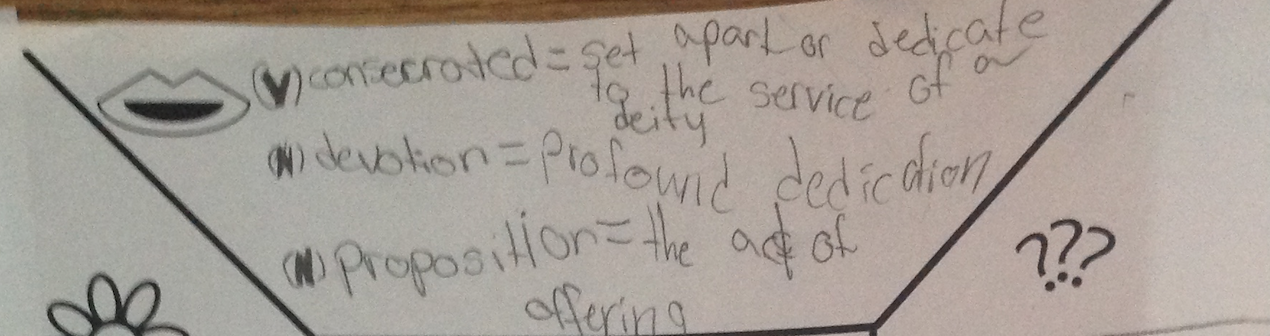
 3. Then using the frame, students listened to the Gettysburg address again, and highlighted terms that were either unknown, unfamiliar, or a student was unsure of a term's meaning in context. Students then selected 3 terms and recorded them in the Language of the Discipline section of the frame. This is where differentiation comes into play, student self selected terminology is specific to each student's needs.
From there, we recorded the terms as a whole group and decided on the Part of Speech of each terms based on its suffix or prefix pattern or it's placement within the context of the sentence. Here is a free frame at my TPT store.

Students then used their resources to define the meaning of the words and recorded the meanings next to the terms in the frame.
CCSS.ELA-LITERACY.CCRA.R.4
Interpret words and phrases as they are used in a text, including determining technical, connotative, and figurative meanings, and analyze how specific word choices shape meaning or tone.
Interpret words and phrases as they are used in a text, including determining technical, connotative, and figurative meanings, and analyze how specific word choices shape meaning or tone.
4.  We then choral read the passage again and students then recorded any unanswered questions students had regarding the passage's meaning or the actual event. Here again, students self selected their questions, further differentiating for student's individualized needs. We then spent a few days learning about the Gettysburg Address using several resources, to include some Primary Sources such as this picture taken the day of the event and a newspaper article written about Abraham Lincoln giving his speech in 1863 found at the Library of Congress website. Because students had selected their own unanswered questions, they were motivated to search for answers with the resources I provided and through their own selected resources.
 We then choral read the passage again and students then recorded any unanswered questions students had regarding the passage's meaning or the actual event. Here again, students self selected their questions, further differentiating for student's individualized needs. We then spent a few days learning about the Gettysburg Address using several resources, to include some Primary Sources such as this picture taken the day of the event and a newspaper article written about Abraham Lincoln giving his speech in 1863 found at the Library of Congress website. Because students had selected their own unanswered questions, they were motivated to search for answers with the resources I provided and through their own selected resources.
CCSS.ELA-LITERACY.CCRA.R.7
Integrate and evaluate content presented in diverse media and formats, including visually and quantitatively, as well as in words.1
Integrate and evaluate content presented in diverse media and formats, including visually and quantitatively, as well as in words.1
5.  We then created Tableaus in groups, with each group focusing on one section of the speech to further enhance comprehension of the passage. Students were very engaged. If you are not familiar with Tableaus, it is not essential to the Close Reading, but it certainly helps students take abstract concepts and make them meaningful.
 We then created Tableaus in groups, with each group focusing on one section of the speech to further enhance comprehension of the passage. Students were very engaged. If you are not familiar with Tableaus, it is not essential to the Close Reading, but it certainly helps students take abstract concepts and make them meaningful.
We also used Ozobots to incorporate coding into the lesson, but again, not an essential component of the Close Reading, but it helped students discuss language meaning and how to represent it with concrete representations.
6.
 As students found the answers to their unanswered questions, they recorded the answers in their frames. I also had them record details they found meaningful aside from their original unanswered questions. This provided differentiation as students who found the topic fascinating, included more details in the frame.
7.
 Then students highlight repeated words in the passage. They found that the words "nation" "honor" and "men" were repeated. From those repeated words, they attempted to come up with the Big Idea of the passage using the repeated words in their sentence (repeated terms highlighted in purple).
CCSS.ELA-LITERACY.CCRA.R.6
Assess how point of view or purpose shapes the content and style of a text.
Assess how point of view or purpose shapes the content and style of a text.
8. Finally, I provided the students with this graphic organizer focusing on the "purpose" of the Gettysburg Address. The question I wanted students to answer was "What was Abraham's Lincoln purpose for writing the Gettysburg Address?" Students wrote the Big Idea in the triangle pediment of the the organizer, then were asked to support their reasons with evidence from the sources we researched using Evidence Based Terms. We then used RACER strategy to answer the actual questions (this was the first time we used the strategy, so the paragraphs were a little rough).
 |
Determine central ideas or themes of a text and analyze their development; summarize the key supporting details and ideas.

CCSS.ELA-LITERACY.CCRA.R.1
Read closely to determine what the text says explicitly and to make logical inferences from it; cite specific textual evidence when writing or speaking to support conclusions drawn from the text. |
 This whole process was completed over a period of a couple weeks. Afterwards, we analyzed the, "I have a Dream" speech by Dr. King (not public domain) using the same strategies, but the question the students addressed was, "What are the parallels between these two influential speeches?"
CCSS.ELA-LITERACY.CCRA.R.9
Analyze how two or more texts address similar themes or topics in order to build knowledge or to compare the approaches the authors take.
Analyze how two or more texts address similar themes or topics in order to build knowledge or to compare the approaches the authors take.
Within this one extended activity, I almost hit every single Common Core Reading Literature in both 5th and 6th grade. I call that success! And most importantly through the repeated practice using the frame and Icons for Close Reading, students began to develop and master skills necessary to independently analyze passages and for their meaning and purpose.
Read and comprehend complex literary and informational texts independently and proficiently.